












Om
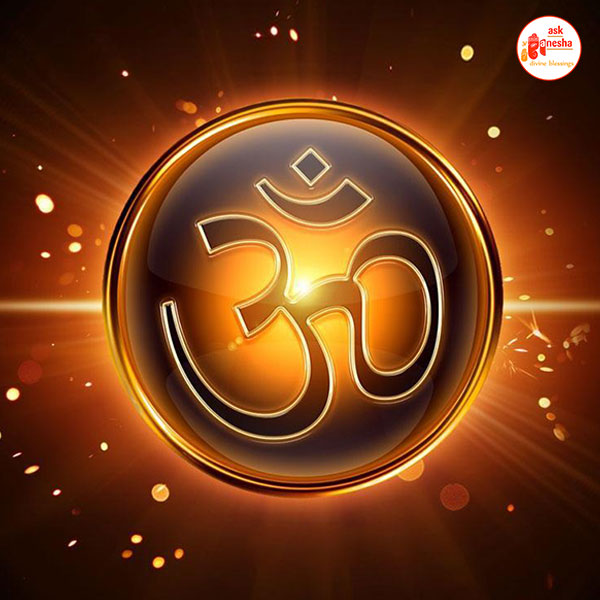
About OM
OM or AUM is the symbol of essence of Hinduism. It means oneness with the Supreme, the merging of the physical being with the spiritual. The most sacred syllable, the first sound of the Almighty - the sound from which emerges each and every other sound, whether of music or of language.
In the Upanishads this sacred syllable appears as a mystic sound, regarded by scriptures as the very basis of every other sacred mantra (hymn). It is the sound not only of origination but also of dissolution. The past, present and future are all included in this one sound and even all that transcends this configuration of time is also implied in OM.
According to TAITREYA Upanishad the origin of language is assigned to PRAJAPATI, from whose meditation on the three words arose the three Vedas and from his meditation arose the three syllables, BHOOR, BHUVA and SUAH, which represent earth, atmosphere and sky. From his meditation on these three originated the divine syllable of OM, which coordinated all speech and represented the totality of the world. The syllable OM also represents the TRIMURTI (triad) of Brahma, Vishnu and Shiva.
Shiva's drum produced this sound and through it came the notes of the octave, (i.e.) SA, RI, GA, MA, PA, DHA, NI. Thus by this sound Shiva creates and recreates the universe. OM is also the sound form of Atman.
The Upanishads state that everything, existent and non- existent, can be grasped by uttering the sacred syllable of OM. The psychotherapeutic efficacy of OM is deemed limitless and its utterance redeems all errors in the performance of a sacrifice. Meditation on OM satisfies every need and ultimately leads to liberation. Nearly all the prayers and recitals of sacred passages are prefixed by the utterance of OM. Its equivalent is OMKAR, venerated in the same manner and is thought to be the representation of God Himself.
Musically, it is also held that the term OM or AUM is made up by three base notes ' A ' 'U' 'M' or the basic 'SA' 'PA' of the fundamental scale and again Sa (the base note) of the immediately higher scale. When one pronounces these notes in continuity, all the basic notes from Sa to Ni also sound. Similarly when one pronounces AUM correctly, all the basic sounds also echo. It is believed to be the traditional way of clearing all the impediments in the vocal chord to make one chant the hymns correctly. Their unison makes one not only sound sonorous but also acts as the necessary preparation to chant a Mantra (Incantation) correctly. It is for this reason that all the Vedic Mantras has 'OM' or' AUM' as the first term.
- info@askganesha.com
- +91 - 9818313151

Crucial Service Disclaimer & Scope of Guidance : All astrological consultations, reports, remedies, and content provided by Askganesha.com are based strictly on Vedic and astrological principles, intended only for guidance, insight, and spiritual support. Askganesha.com and our experts are NOT licensed professionals in regulated fields. For any matters concerning medical conditions, mental health, financial planning, legal issues, or clinical psychological/mental health matters, you must consult a qualified, licensed professional in the relevant domain. Astrological guidance is used at your own risk and is not a substitute for professional, regulated advice. We offer no guaranteed results for predictions or remedies. Any action taken based on our advice is your sole responsibility. Read Full Disclaimer & Terms of Service Here.

 Translate